
Environmentally friendly paper trays have become increasingly popular for their eco-conscious appeal and versatility in various industries. However, one of the challenges associated with these paper trays is their vulnerability to moisture. In this article, we will explore strategies to boost the moisture-proof properties of environmentally friendly paper trays, enabling them to maintain their integrity and functionality in damp conditions.

Understanding the Moisture Vulnerability
Environmentally friendly paper trays are typically crafted from recycled paper or sustainable sources, making them biodegradable and environmentally responsible. However, these materials are more susceptible to moisture compared to plastic or foam alternatives. When exposed to humidity or liquid, paper trays can weaken, deform, and even become a breeding ground for mold and bacteria. Addressing this vulnerability is crucial for preserving product quality and ensuring consumer safety.
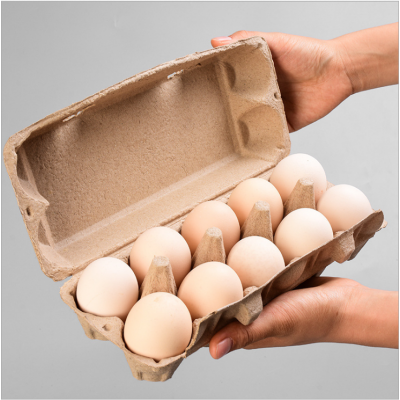
Moisture resistance begins with raw materials.
Molded pulp trays produced from sugarcane bagasse and bamboo fiber naturally perform better than conventional paper-based materials. These agricultural fibers have:
Higher fiber density
Stronger natural bonding
Better structural stability in humid conditions
Compared to low-density fibers, bagasse and bamboo pulp create a tighter fiber network, reducing water absorption at the base material level.
Many experienced manufacturers, including HTAECO, prioritize these plant-based fibers specifically for applications where humidity control matters.
The manufacturing process plays a major role in moisture performance.
Key process improvements include:
Higher forming pressure to compact fibers more tightly
Controlled drying temperatures to reduce internal moisture retention
Uniform wall thickness to prevent weak absorption points
A well-optimized wet-press or thermoforming process results in trays with lower porosity and improved resistance to moisture penetration.
Surface treatment is one of the most effective ways to improve moisture resistance.
Modern molded pulp trays can use biodegradable, food-safe coatings, such as:
Water-based dispersion coatings
Plant-derived barrier layers
Compostable bio-coatings
These treatments form a thin protective layer that slows moisture absorption while keeping the tray recyclable or compostable.
Importantly, the coating must be matched to the application—food packaging, for example, requires grease resistance in addition to moisture protection.
Design is often overlooked but has a direct impact on performance.
Smart design choices include:
Raised ribs or channels to prevent liquid pooling
Reinforced corners to maintain strength in humid environments
Ventilation features for applications involving hot or freshly prepared food
A tray that sheds moisture efficiently will outperform a flat or poorly designed structure, even when made from the same material.
Not every application needs full waterproof performance.
It’s important to define:
Exposure time (short-term vs long-term humidity)
Temperature conditions
Direct contact with liquids or condensation
For many uses—such as food service trays, electronics inserts, or retail packaging—enhanced moisture resistance is sufficient without overengineering the product.
Experienced molded pulp manufacturers often guide customers to the most cost-effective solution rather than unnecessary treatments.
Achieving moisture resistance is not just about adding coatings—it’s about balancing performance, sustainability, and cost.
Manufacturers with in-house tooling, material control, and process expertise can adjust fiber blends, molding parameters, and surface treatments together, ensuring consistent results at scale.
This is why brands increasingly work with specialized molded pulp factories like HTAECO, which focus on functional fiber packaging rather than generic paper products.

Eco-friendly paper trays do not have to sacrifice moisture resistance. By using high-quality sugarcane bagasse and bamboo fiber, optimizing molding processes, applying biodegradable coatings, and refining structural design, molded pulp trays can perform reliably in humid and demanding environments.
When designed correctly, molded pulp packaging delivers both environmental responsibility and real-world performance, making it a strong alternative to plastic for modern packaging needs.


